When climate tech companies fail, years of expensive R&D and valuable data get lost: deleted, abandoned, or destroyed. CTRL-S acquires that IP and makes it available to energy companies, industrials, and companies across adjacent sectors that can scale it and bring it to market.
Over $2.3 billion in private capital has been invested in DAC companies since 2018, yet CDR.fyi finds that only 0.05% of contracted credits have been delivered. Many DAC companies face acute financing pressure and may not bridge the commercialization valley of death. When they fail, their intellectual property, experimental data, and operational know-how vanishes, putting at risk the knowledge embedded in billions of dollars of public and private investment.
"The honeymoon is over. Investment and sales are falling, while deployments are delayed across almost every company."CDR.fyi, Direct Air Capture Market Snapshot 2025
CTRL-S acquires IP, data, and tacit knowledge from companies unable to commercialize before it disappears. Every asset is evaluated by a founding team with direct DAC and IP experience, then independently reviewed by an advisory network of leading DAC experts.
IP, operational data, and tacit knowledge from DAC companies unable to commercialize. Structured as asset transfers with founder knowledge transfer sessions capturing undocumented know-how.
Two-layer diligence: founding team evaluation, then independent expert review. Output: standardized benchmarks across performance, degradation, energy intensity, and failure modes.
Each acquisition feeds a growing comparable dataset: an independent DAC performance benchmark. Subscribers get intelligence on where technologies sit relative to each other. As the portfolio grows, the platform becomes more valuable.
Non-exclusive licensing by default, enabling cross-sector deployment. A sorbent chemistry licensed to an energy major for DAC doesn't conflict with licensing the same IP to a water treatment company.
Annual corporate access to the CTRL-S repository: diligenced IP packages, performance benchmarks, and technical assessments for companies evaluating or developing carbon capture technology.
Non-exclusive licensing across sectors. The same IP can serve DAC, industrial gas, water treatment, and other applications.
Long-term participation tied to real-world deployment of licensed technologies.
Structured experimental datasets, including negative learnings rarely found in academic literature, available to research institutions, industrial R&D teams, and AI materials science platforms.
Founders are already scattering, data is being deleted, and equipment is being scrapped. Preservation requires acting before the crisis peaks.
Over 40 venture-backed DAC companies raised $2.3B+ between 2018 and H1 2025. CDR.fyi concludes most will fold or be acquired. Series C deal counts hit an all-time low in 2025. Acquisitions made up 89% of all climate tech exits in 2025.
~63% of the Forbes Global 2000 now have net-zero targets. Japan's GX-ETS transitions to mandatory in FY 2026. The UK will integrate engineered CDR into its ETS by 2029. At least eight major compliance markets now allow some form of carbon removals.
DAC operates at ~400 ppm CO₂, the hardest conditions in carbon capture. Technologies that underperform at DAC specs often excel in industrial gas separation, water treatment, and hydrogen production. Many assets can license across multiple markets.
Materials science and industrial R&D teams are increasingly seeking real-world experimental data to complement computational models. Successful experimental data can feed into future work and designs. Failed experiments and negative learnings, rarely published in academic literature, are among the most valuable and scarcest inputs. CTRL-S recovers this data at dramatically lower cost than generating it from scratch.
Our thesis rests on three structural certainties
Climate impacts compound. Action becomes inevitable regardless of political cycles.
Human ingenuity and AI drive learning curves when knowledge is accessible.
Durable climate action will be deployed when breakthrough innovation meets industrial-scale capital and infrastructure.
CTRL-S does not depend on DAC deployment to create value. Subscriptions serve companies evaluating carbon capture technology today. Licensing captures value across sectors, as DAC-developed IP can have cross-industry applications. Experimental data has standalone value to research and R&D buyers. Each revenue stream operates independently, making the model resilient by design.
Let's Talk →
Co-founded and led the Direct Air Capture Coalition from zero to 110+ members across five continents, helping establish it as one of the field's leading convening platforms. Organized two Global DAC Conferences with Breakthrough Energy, RMI, and Columbia University, featuring Secretary John Kerry and Senator Bill Cassidy.
Bezos Earth Fund Greenhouse Gas Removal Ideation Prize Finalist and reviewer for the Fund's Roadmap. Former member of the U.S. Department of Commerce Environmental Technologies Trade Advisory Committee. Quoted in Forbes, Wired, Scientific American, Politico, and others. Speaker at the Global Clean Energy Action Forum, Africa Climate Summit, Carbon Unbound, and SXSW.
Previously led clean energy policy at Con Edison and supported climate initiatives at the U.S. Department of Defense. M.S. NYU (Honors with Distinction), B.A. Brown.

Former DOE DAC Hubs Program Manager
CURA CTO
Carbon Direct Capital
Former Breakthrough Energy Carbon Policy Lead
Former DOE OCED Director
Good Energy Collective
Africa Climate Ventures CEO
Samos Energy Chair; Amerocap Founder
Co-Founder & CEO, Mosaic Materials (fmr)
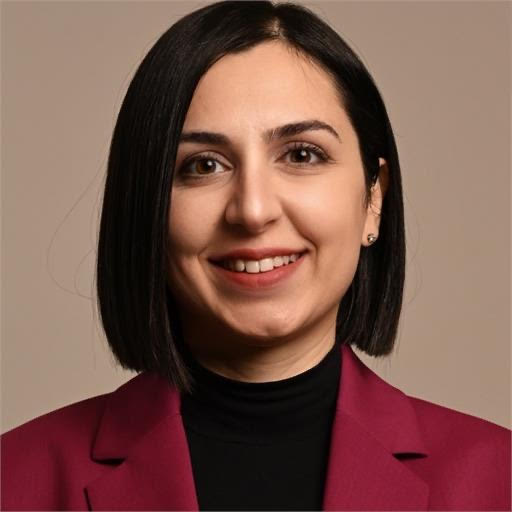
Carbon Lead, Third Derivative
Whether you're a corporate buyer evaluating technology, an investor seeking countercyclical opportunity, a founder with IP to preserve, or someone who wants to join the team, we'd like to hear from you.
CTRL-S is building a coalition of partners across the climate innovation ecosystem.
Opens a short form. Takes less than 2 minutes
Have IP to transfer? Start here →